

How To Plan For Good Light On Your Wedding Day
Good lighting is a crucial ingredient in great photography and an essential tool for any photographer who wants to capture a couple’s wedding day honestly and beautifully. And when we talk about how to plan for good lighting on your wedding day, we’re not just talking about natural light. We’re talking about all the light (fluorescent, ambient, direct, harsh, speckled, and low-lit). You can be the most stunning couple in the world, but if the light isn’t working in your favor, photos can feel dull, flat, or lackluster. As a wedding photographer, my job is to understand light—when to soften it, when to shape it, when to pull it back, and when to lean into the darkness—so you look like a freaking badass on your wedding day.
A professional wedding photographer can help you plan for this by walking you through lighting considerations at every stage of the day. That includes getting-ready photos, first-look photos, ceremony lighting, golden-hour couple photos, and even reception and exit photos at the end of the night. Knowing how lighting changes throughout the day (and the physical tools at our disposal) helps us create a timeline that supports your vision while still allowing flexibility for real, candid moments. Planning doesn’t mean forcing perfection. It means setting yourself up for the best possible conditions.
And one important reminder: everything discussed here is simply a guide, not a rulebook. There is no mandate to follow any of this to the letter. Weddings (and marriages) are about your people, your story, and your commitment to one another. It is NOT a perfectly timed schedule. This information exists to support you, educate you, and help us work together to create photos that feel true to your day. Because at the end of it all, that’s what matters most.

Getting Ready: The Most Chaotic (and Emotional) Part of the Day
The getting-ready portion of a wedding day is often the most chaotic. Hair tools everywhere, half-packed bags, people coming in and out of the room, emotions running high, and a timeline that suddenly feels very real. It’s also when some of the most meaningful interactions happen between the couple, their friends, and their families, all in the quiet before the ceremony begins.
Why Good Light Matters Here
Good lighting has a way of softening chaos. Natural light helps simplify a busy room, minimizes distractions, and brings focus back to what matters most: the people and the moments unfolding. When a space is well-lit, your images feel cleaner, calmer, and more intentional. This is true even if the room itself is anything but chaos-free.
When planning your timeline, aim to have the finishing stages of getting ready happen around midday, when natural light is most available. This allows light to fill the room, creating flattering skin tones and soft shadows that translate beautifully in photos.
Show Off the Details You Worked So Hard On
You spent months (sometimes years) choosing your outfit, accessories, and personal details. The getting-ready portion of the day is when those details truly get their moment. Dresses, suits, shoes, jewelry, heirlooms, and final touches photograph best in strong, natural light.
Choosing the Right Space for Prep
If you have options, prioritize prep spaces with large windows, neutral-colored walls, and enough room to move without feeling cramped. Bright spaces reflect light more evenly, reducing color casts and making both candid moments and detail shots more visually cohesive. Even simple choices—like clearing a small area near a window—can make a big difference.
Bonus: An added benefit of natural light during prep is improved makeup application. Makeup applied in good light appears more balanced, photographs more accurately, and holds up better across the changing lighting conditions of the day. It’s one of those behind-the-scenes details that pays off in every gallery.
First Looks
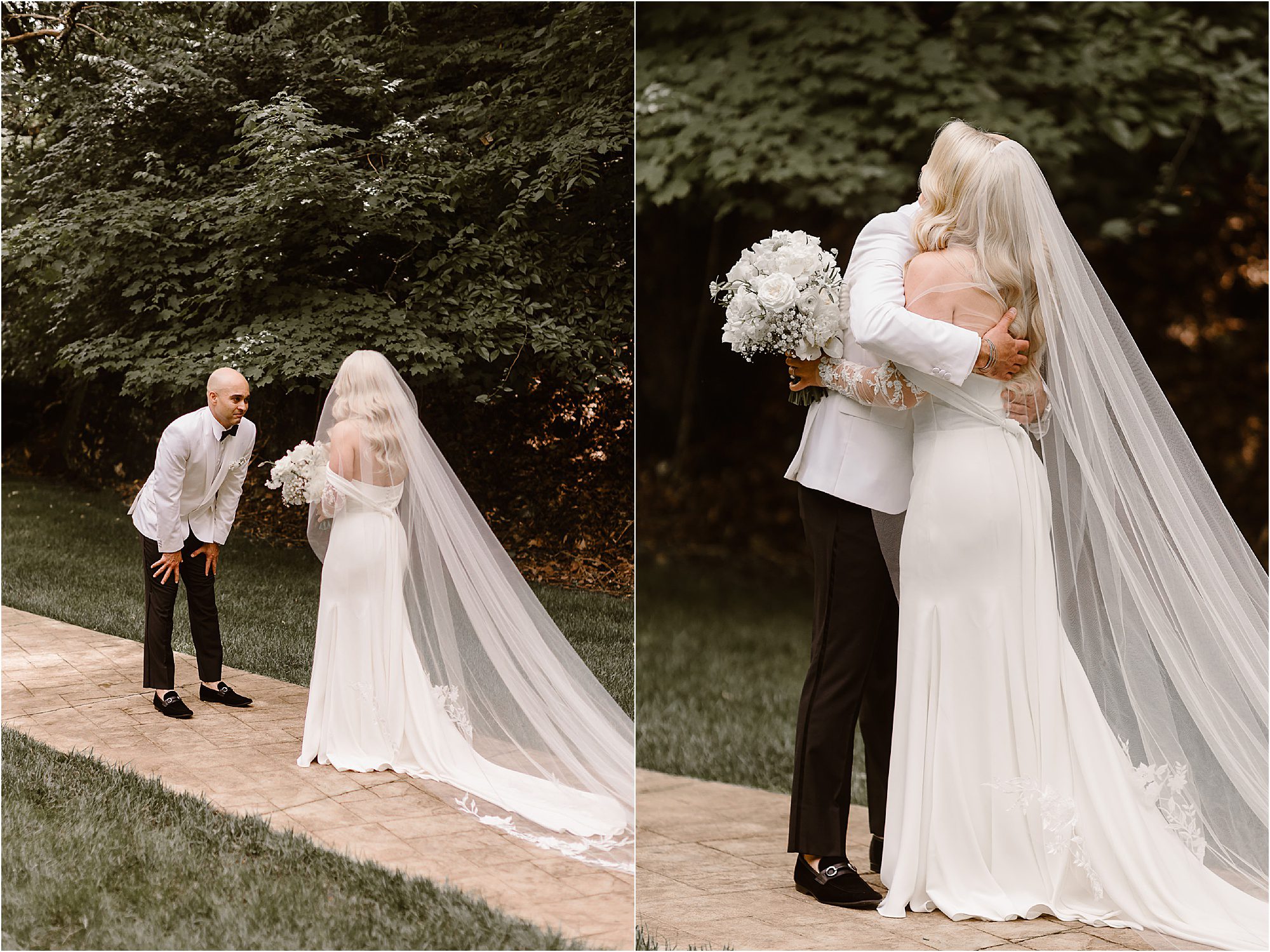
First looks typically happen earlier in the afternoon, right after the couple is fully dressed and ready. This is often one of the first moments you see each other privately on the wedding day, so lighting matters not just technically, but emotionally. At this point in the day, the sun is usually higher in the sky—and sometimes at its hottest—which means the goal is to find light that feels even, flattering, and calm.
Finding Even Light Outdoors
When first looks happen outside, we prioritize shade. That might mean standing under a tree line, beside a building, or in an area where the light is blocked and diffused. Even shade allows us to avoid harsh shadows under the eyes and strong contrast across faces while still keeping everything natural and candid. Shade doesn’t mean dark—it means controlled light that lets the focus stay on the moment instead of the sun.
Using Window Light Indoors
For indoor first looks, we look for strong, directional window light. Window light creates beautiful contrast and depth while still feeling soft and intimate. It’s perfect for quiet moments, emotional reactions, and close-up portraits that feel timeless rather than overly staged. These spaces also tend to feel calmer, which helps couples stay present during an already emotional part of the day.

Why Lighting Matters During Your Wedding Ceremony
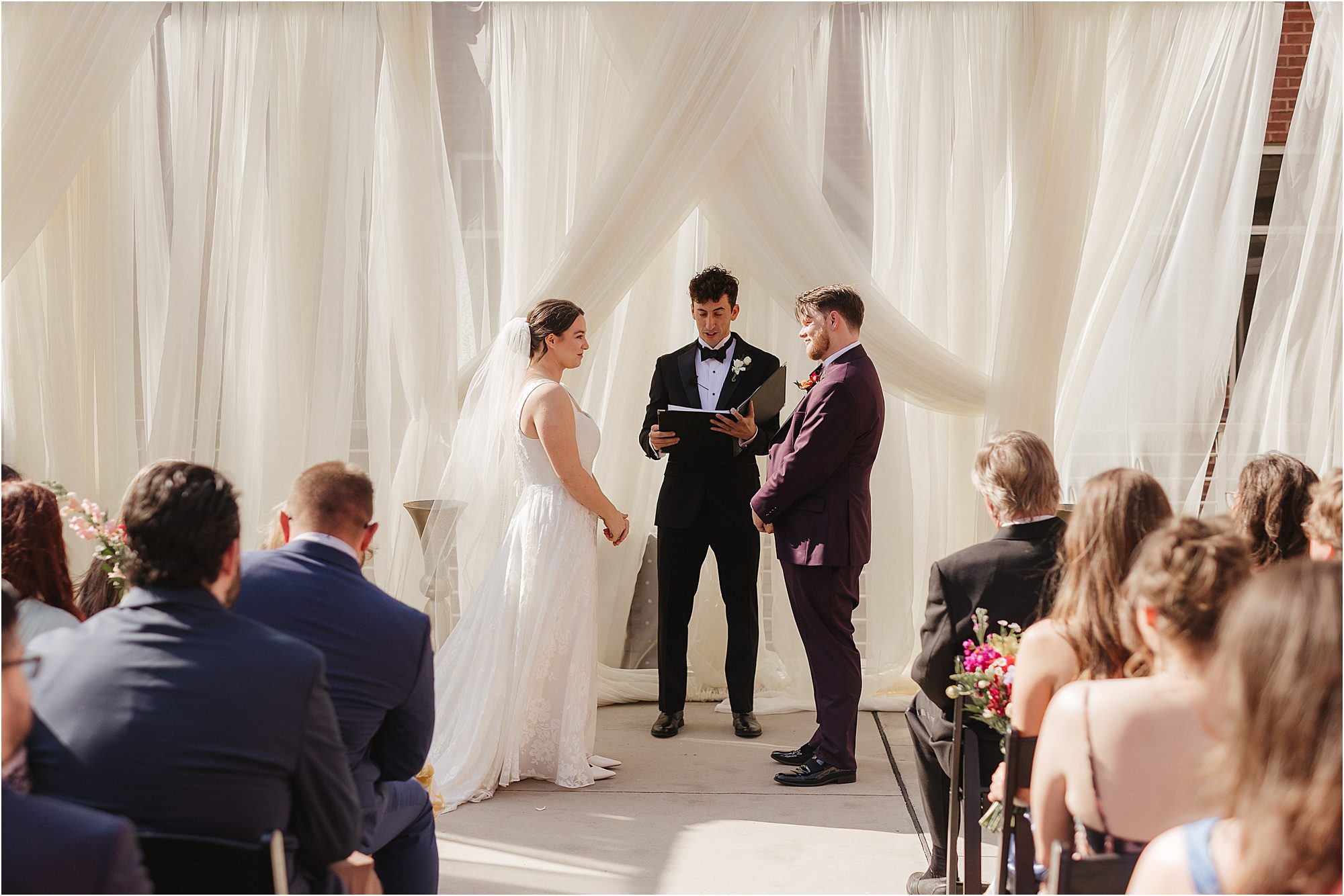
Unlike studio photography, wedding photography happens in real time, in real spaces, with lighting we can’t move or control. During your ceremony, especially, your photographer can’t reposition you for better light without disrupting the moment. That’s why understanding how lighting works ahead of time helps everyone plan smarter and get the best possible images.
The Goal: Even, Natural Light
Even lighting is the dream scenario. It allows your photographer to move freely, capture multiple angles, and deliver consistent skin tones throughout your gallery. Overcast days are actually ideal for this reason. Cloud cover acts like a natural diffuser, creating soft, flattering light that works beautifully from almost any direction and gives your timeline more flexibility.
Common Lighting Challenges to Be Aware Of
Some lighting situations require a little extra planning:
- Backlighting occurs when the light source is behind you, casting faces into shadow. While this is stunning for golden-hour portraits, it can be tricky during a ceremony.
- Uneven lighting occurs when light hits one side of the couple but not the other, often due to the sun’s position.
- Harsh midday light (typically late morning to early afternoon) creates strong shadows and contrast.
- Mixed indoor lighting occurs when natural daylight and artificial light clash, affecting color balance.
- Speckled lighting comes from sunlight filtering through trees, creating patchy highlights and shadows.
- Low lighting after dusk or in dim indoor spaces can introduce grain and reduce visibility, especially for guests away from the main light sources.
None of these scenarios is “wrong,” but they do affect how photos turn out and how much flexibility a photographer has during the ceremony.
Ceremony Planning Makes the Difference
The good news is that many lighting challenges can be reduced with intentional planning. Ceremony timing, location choice, and venue coordination all play a role in creating better light. When couples, photographers, and venue teams work together, it’s often possible to preserve the mood you love while still setting yourself up for beautiful photos.
Your Vision Still Comes First
Lighting considerations should never override your wedding vision. Romantic, candlelit ceremonies and sunset celebrations can be absolutely stunning. Being aware of how light affects photography simply helps set expectations and ensures your photographer can capture your day in the most honest and beautiful way possible.
Speaking Of Golden Hour Photos
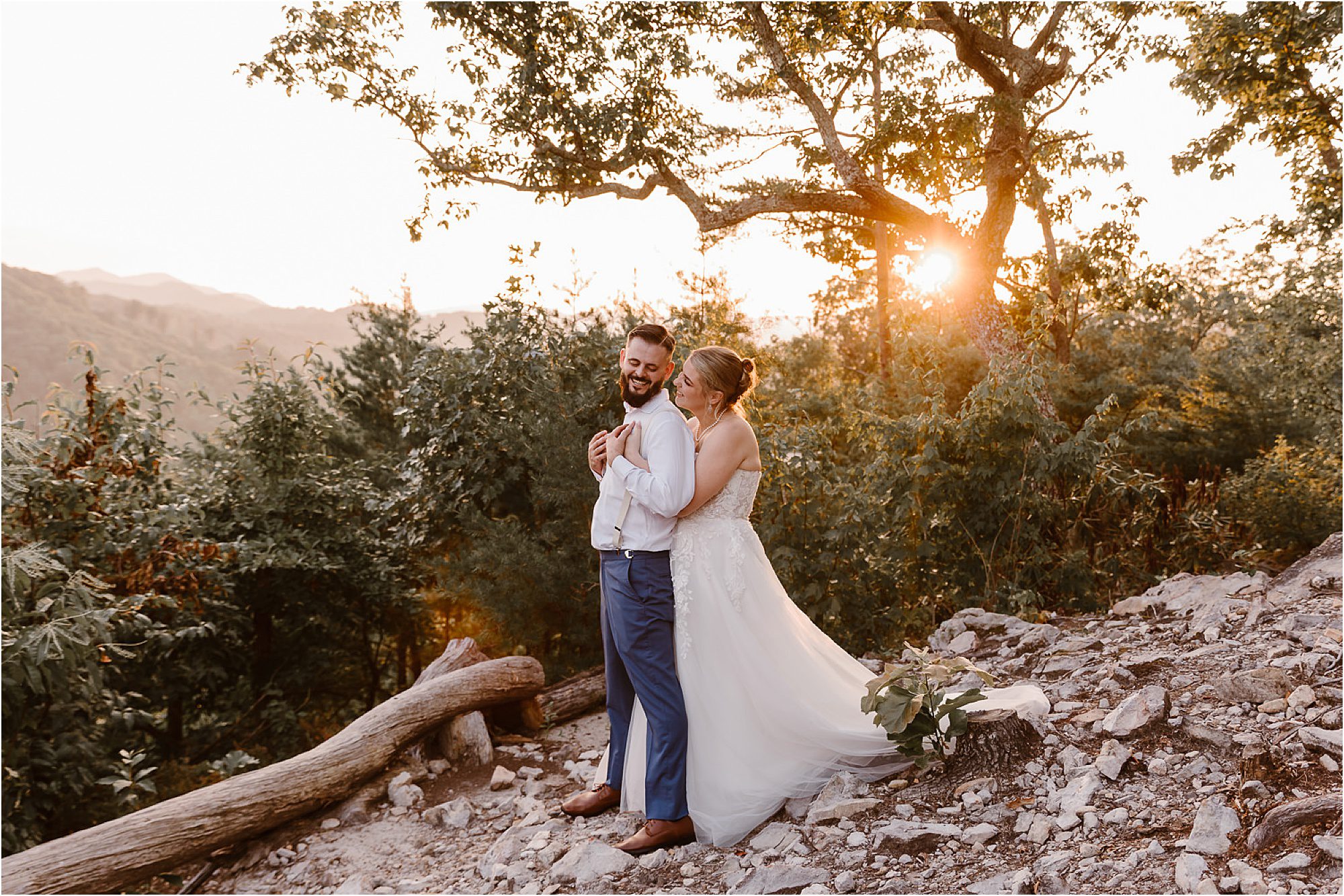
The Golden Hour can be witnessed twice during the day. The first hour after sunrise and the last hour before sunset. During golden hour, the sun is at its lowest point in the sky. When the sun is low it produces a very soft, diffused light which is far more flattering than the harsh early afternoon sun. Golden Hour can create dreamy couple photos post-ceremony. Or with a later ceremony, your guests will be much more comfortable without the sun beating down on them. Especially those guests in full suit attire.
Even if couples decide to do a First Look earlier in the day, we will ALWAYS recommend golden hour photos. That time of day is just too beautiful to pass up. And don’t worry, we’ll work those photos into your timeline so you don’t miss out on all the drinking and dancing at your reception.
Bonus: Avoiding midday sunlight when it’s at its brightest also helps fight the tendency to squint in photos.

Into The Night: Lighting After Sunset
Once the sun goes down, lighting becomes entirely artificial, and it’s here that style, planning, and intention matter most. Every venue handles nighttime lighting differently, and every couple has a different vision for how their reception should feel. There’s no single “right” approach, but having a plan ensures the space feels intentional rather than improvised.
Warm, Natural-Looking Light
Want a touch of “the whimsy” to your reception space? Options like Italian string lights are a favorite because they add ambience without overpowering the space. They create a soft glow, beautiful bokeh in photos, and can visually define a space where no physical room exists. For outdoor and backyard weddings, especially, string lights create a cozy, inviting atmosphere while still allowing for flattering photos throughout the night.
DJ Lighting and Party Energy
Another common option is DJ-provided lighting, which can include uplighting along walls, inside tents, or across ceilings. Some DJs also incorporate colorful or laser-style lighting that adds energy and movement to the dance floor. This type of lighting can be incredibly fun and leans heavily into the party vibe of the evening. Neither warm ambient lighting nor DJ lighting is better or worse. The key is knowing what you’re choosing and leaning fully into that style so it feels cohesive.
How Photographers Light a Reception
In addition to venue and DJ lighting, photographers often bring lights to enhance the space. How and when we use them depends on the room size, the dance floor layout, and the overall feel of the wedding. Sometimes we won’t use flash at all. Other times, we rely on on-camera speedlights, lights on stands around the room, or a combination of both. Most weddings use a mix throughout the night as lighting needs change from speeches to dancing to open floor moments.
Setting Expectations for Nighttime Photos
Low-light photography will always look and feel different from daytime images, and that’s part of the charm. Nighttime photos tend to be moodier, more dynamic, and more candid. With thoughtful lighting choices and clear expectations, your after-dark images can be just as impactful as the ones taken earlier in the day—just with a different kind of magic.

Hire Erin Morrison Photography
Planning how the light will affect your wedding will help your photographers create beautiful wedding photos and memories you will treasure for years to come. If you are interested in working with me for your wedding photography and capturing that gorgeous light, please fill out the information on my contact page, and we will set up a call!