


Feet Washing Ceremony: A Christian Wedding Tradition
A feet washing ceremony is a deeply personal way for Christian couples to include their faith in their wedding ceremony. I have had the opportunity to photograph this tradition before, and I love the symbolism behind it. Following the example of Jesus washing the disciples’ feet, the couple washes one another’s feet as a symbol of humility, service, and love.
Whether you include it in your wedding ceremony or use it during a vow renewal, this ritual serves as a meaningful reminder that your spouse is your equal partner. Marriage is not only about celebrating together. It is also a commitment to care for one another, serve one another, and follow Christ’s example throughout your life together.
What Is a Feet Washing Ceremony?
During a wedding feet washing ceremony, each person takes a turn washing the other’s feet. The couple typically uses a basin, a pitcher of warm water, and a towel. The couple may include a prayer, Scripture reading, or blessing as they complete the ritual.
The primary purpose is not the physical act of cleaning someone’s feet. Instead, the person washing is demonstrating a willingness to serve with humility. For a couple beginning their marriage, the act can represent a promise to care for one another through ordinary responsibilities, difficult seasons, and everything that follows the wedding day.
Foot washing also serves as a profound social equalizer. When practiced within a church or faith community, it demonstrates that all members are equal in faith. Status, position, and authority are set aside as each person takes the place of a servant.
Within a wedding ceremony, that same message applies to the couple. Neither person is presented as greater than the other. Both are called to love and serve.
What Does Washing Feet Symbolize in the Bible?
The Christian practice of foot washing comes from John’s Gospel. During the Last Supper in the upper room, Jesus washed the disciples’ feet and dried them with a towel. Washing feet was normally associated with hospitality and humble service, which made Jesus’ actions especially meaningful to those gathered with Him.
After Jesus washed their feet, He instructed His disciples to follow His example. This moment is closely connected to Christ’s command to love one another. For Christians, Jesus’ foot washing demonstrates that leadership, love, and faith are expressed through service rather than status.
A couple who includes this act in their wedding is not reenacting every detail of the Last Supper. They are using a recognizable Christian symbol to acknowledge the kind of marriage they hope to build: one grounded in faith, humility, and a willingness to care for each other.

Foot Washing in Christian Tradition
Ritual foot washing has appeared in Christian worship in different forms since the early centuries of the church. The practice is especially associated with Holy Week and Maundy Thursday, when many congregations remember the Last Supper, the Lord’s Supper, and the new commandment Jesus gave His disciples.
Current practice varies widely. In some churches, foot washing is part of a Maundy Thursday service or communion service. Some Roman Catholic churches include the ritual during Holy Week, while certain Protestant traditions practice it at other times as an ordinance or act of worship.
Depending on the denomination, clergy members may wash the feet of lay people, congregation members may wash one another’s feet, or the church may not practice ritual washing at all.
Christian denominations often adapt the foot-washing ritual. Its placement in a church service, who participates, and its theological meaning may differ. Couples should talk with their pastor, priest, or officiant about their church’s teaching and whether foot washing can be included in their wedding ceremony.
What Foot Washing Symbolizes in a Christian Marriage
Washing another’s feet is a humbling ritual because it requires both people to participate in different ways. One person kneels to serve, while the other must be willing to receive that service. Then they exchange places.
That balance can carry particular meaning within marriage. Both people will have moments when they give help and moments when they need it. Foot washing recognizes that marriage requires humility in both roles.
It can represent a commitment to serve without keeping score, accept care without shame, and remember that neither spouse’s needs are beneath the other’s attention.
For some couples, washing one another’s feet also represents spiritual cleansing, prayer, or a shared commitment to follow Jesus Christ. It does not replace baptism, communion, or another sacrament recognized by their church. Understand its meaning within the couple’s own faith tradition.

How a Wedding Foot Washing Ceremony Works
A foot washing ceremony is usually simple, but you should still plan it with the officiant and wedding team. The couple will need one or two chairs, a low basin, a pitcher of warm water, and one or more towels. Someone should also decide who will place the items before the ritual and remove them afterward.
The officiant may introduce the meaning of the act before the couple begins. The officiant may read a passage from John’s Gospel, followed by a brief prayer or blessing.
One partner removes a shoe, places a foot over or inside the basin, and allows the other person to pour the water. The person washing gently washes and dries the foot before the couple changes places.
The act does not need to be long to be meaningful. In many wedding ceremonies, a few quiet minutes are enough. Couples can play music, invite guests to pray silently, or let the officiant’s words guide the moment.
Planning Foot Washing for Your Wedding Ceremony
Before adding foot washing to the ceremony, think about the physical setup. A stable chair is important, especially with wedding clothing and formal shoes. The basin should be large enough to catch the water without making it difficult for the couple to move.
Use warm water rather than water that is uncomfortably hot or cold. Keep an extra towel nearby in case water reaches the floor.
The couple should also practice the basic movements before the wedding. You do not need to rehearse the emotion of the moment, but it helps to know where the basin will sit, how much water to pour, and how each person will manage a dress, suit, veil, or shoes.
A little preparation helps the ceremony stay focused on its spiritual meaning.
If you are planning a Knoxville church wedding or getting married in another church with established liturgical rules, ask before making plans. Some churches may permit the practice, some may adapt it, and others may ask that it take place outside the formal wedding service.
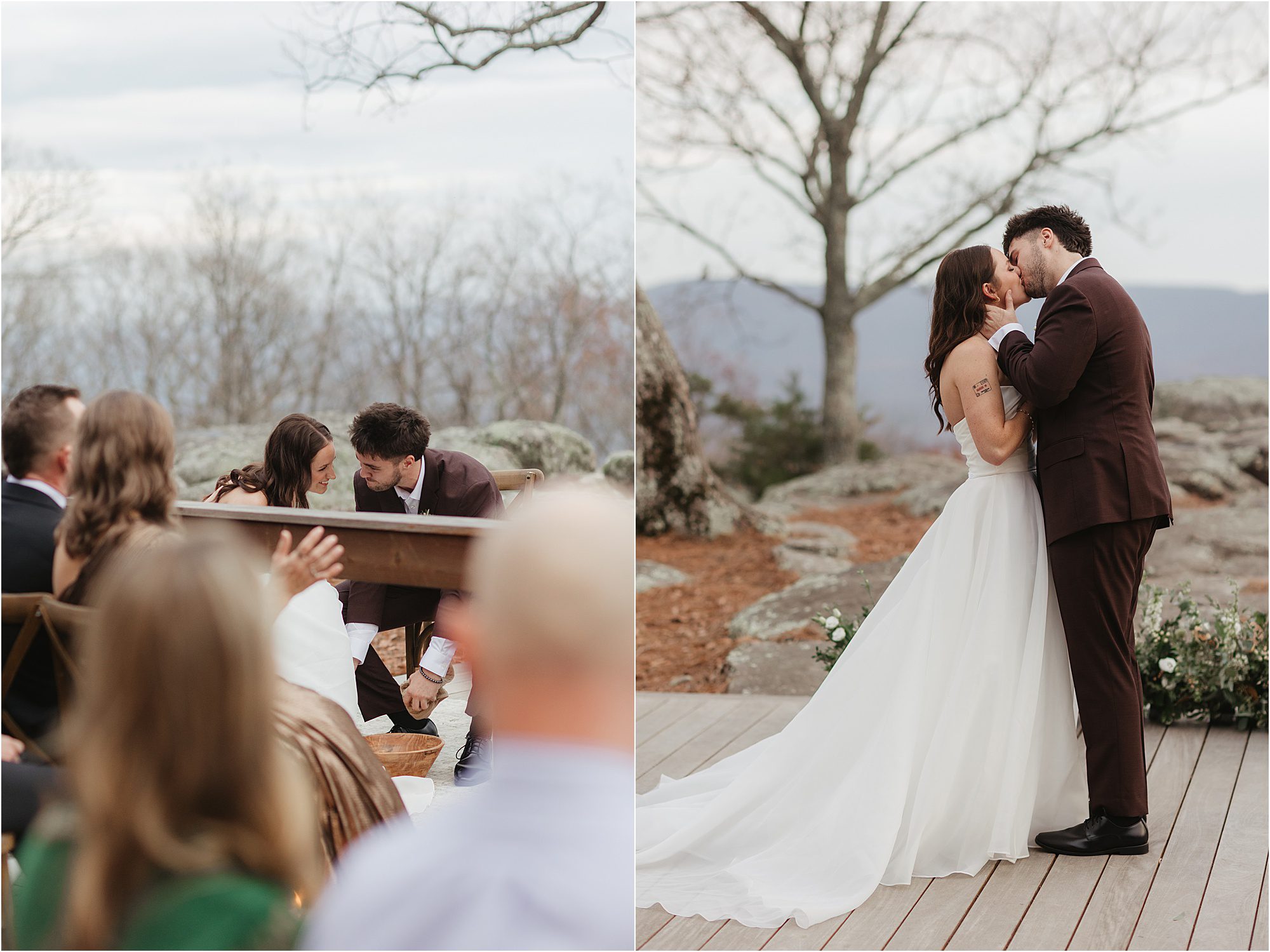
Photographing a Feet Washing Ceremony
From a photography standpoint, the setup matters. Place the basin where both people can comfortably turn toward each other without being hidden from guests. Also leave enough room for the photographer to document the ritual without standing in the aisle or interrupting the prayer.
Your photographer should know about the foot washing before the wedding day. This makes it possible to plan for the angle, available light, and movement involved.
Once the ritual begins, the photographer can remain quiet and document the pouring water, the act of washing, the expressions between the couple, and the response of family members without directing the moment.
A Humbling Ritual Centered on Service
A feet-washing ceremony may not be right for every Christian couple, and it does not carry the same meaning in every church. For those who feel connected to the tradition, however, it can be one of the most personal parts of the wedding ceremony. Couples who want to include a different symbolic practice can also explore these unity ceremony ideas.
The act is simple: water is poured, each person kneels, and a towel dries each foot. The promise behind it is much larger. By choosing to wash each other’s feet, a couple begins marriage with a visible commitment to humility, equality, faith, and loving service.
Photographing Weddings Across Faiths and Traditions
I photograph everything from traditional Christian weddings to Hindu-Jewish fusion weddings, non-denominational ceremonies, and everything in between. Some couples follow long-standing religious traditions, while others combine their faith, culture, families, and personal beliefs in a way that feels right for them. Whatever you include in your wedding ceremony, my job is to understand what matters to you and document it honestly without becoming a distraction.
No matter your faith or tradition, I want to be a part of it. Contact me today and let’s get planning your big day.